
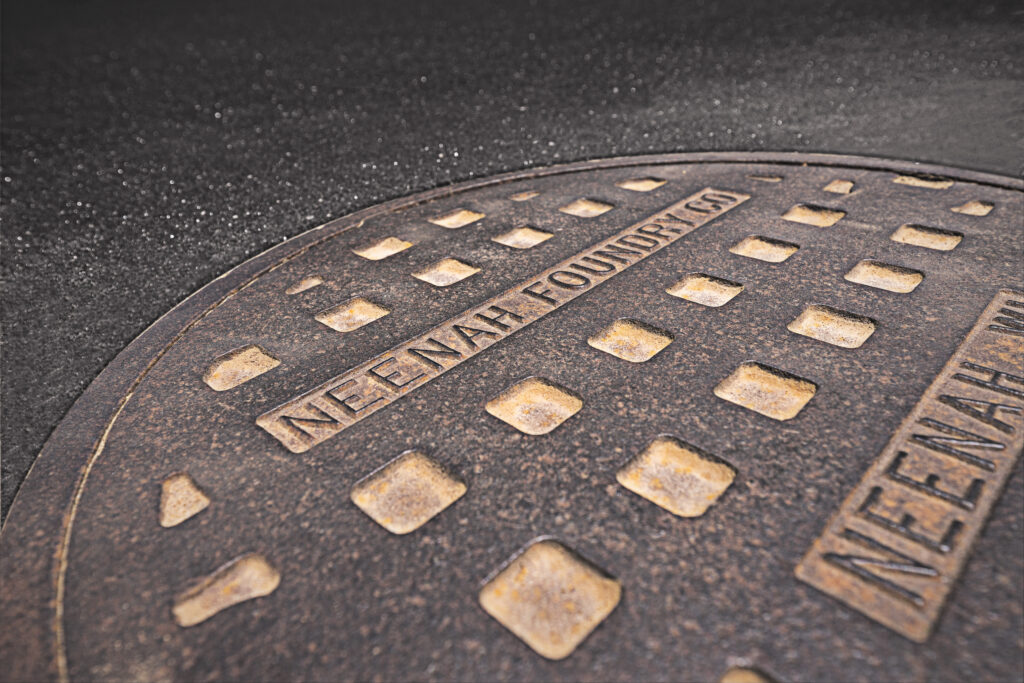
Most cast iron manhole covers weigh between 80 and 300 pounds, with a standard 24-inch municipal cover coming in around 100 to 150 pounds. This guide discusses everything you need to know about manhole cover weight.
How Much Does a Manhole Cover Weigh?
While common cast iron manhole covers weigh roughly 100 to 150 pounds, that number can vary based on diameter, material, load rating, and design. Smaller light-duty covers can weigh under 70 pounds, while large, traffic-rated covers can top 400 pounds.
The chart below outlines the general weight range by size and duty class.
| Diameter | Light-Duty | Traffic-Rated (H-20+) |
| 18″ | 40–70 lbs | 70–160 lbs |
| 24″ | 70–100 lbs | 100–250 lbs |
| 30″ | 100–140 lbs | 140–325 lbs |
| 36″ | 140–180 lbs | 180–400+ lbs |
These are general ranges. The actual weight depends on the specific casting design and frame configuration, so always check the manufacturer’s submittal data before finalizing a spec. At Neenah Foundry, we provide full product data for every cover in our catalog.
The frame also adds weight, usually another 75 to 250 pounds, depending on the size and design. For a complete 24-inch H-20 assembly, you’re often looking at 300 pounds or more combined.
Additionally, most manhole covers are round because a round cover can’t fall through a round opening, no matter which way you turn it. A square cover can be tipped in diagonally. Round also makes the cover easier to move since you can roll it rather than carry it, which is important when you’re trying to move a 150-pound piece of iron by hand.
What Determines a Manhole Cover’s Weight
Several variables affect how much a cover weighs. Understanding them helps when comparing products or writing a spec.
Material
Most covers are made from gray iron (ASTM A48), which is strong, corrosion-resistant, and the industry standard. Ductile iron (ASTM A536) handles higher loads, so it’s used where airport load ratings are needed. Composite covers are lighter, but there’s no recognized U.S. testing standard for them. This limits where they can be specified.
Size
Diameter is the biggest driver of weight. Moving from a 24-inch to a 30-inch cover means a lot more material, more surface area, and more thickness. Common diameters include:
- 18 inches
- 21 inches
- 24 inches
- 30 inches
- 36 inches
Each diameter adds significantly more mass.
Load Rating
Load rating determines how thick the casting needs to be. A pedestrian-rated cover doesn’t need the same thickness as one rated for H-20 or HS-25 traffic loading per American Association of State Highway and Transportation Officials (AASHTO) or Federal Aviation Administration (FAA) airport loading. The heavier the required rating, the heavier the cover.
Design
Design features can also add weight. Vented covers weigh slightly less than solid ones, while watertight or gasketed ones weigh slightly more. Logos, lettering, bolt-down hardware, and locking mechanisms also add weight. Neenah Foundry design engineers work with municipalities to reduce weight by optimizing geometry of the lids while maintaining load rating.
Having the right equipment on the truck helps prevent most field injuries. What you need depends on the manhole cover:
- Manhole hooks and lifting keys: These are the standard tools for picking holes and basic leverage on most covers.
- Magnetic lifters: These give you two-handed control and reduce the risk of dropping the lid on ferrous covers.
- Pry bars: These are great for covers that are stuck, sealed, or have pavement built up around them.
- Powered or hydraulic lifts: If the cover is H-20-rated or heavier, these are required.
- Tripod and rope hoist: These help you both remove the cover and enter confined spaces.
- Wheeled cover dolly: This rolls the cover clear, so nobody has to hold it.
- Personal protective equipment (PPE): Steel-toe boots, cut-resistant gloves, hi-visibility vests, and knee pads help keep you safe on the job.
If you’re specifying a cover for a utility vault, telecom infrastructure, or any site that needs to be frequently accessed, look at spring-assisted or hinged cover options. Neenah Foundry offers assisted-opening hatches and access covers that reduce the physical burden on crews over the long run. Contact us today to learn more about our full product catalog.
Frequently Asked Questions About Manhole Cover Weight
How much does a standard manhole cover weigh?
. Light-duty covers can come in under 100 pounds, and traffic-rated H-20 covers can reach up to 250 pounds. The frame also adds weight.
Why are manhole covers so heavy?
They need to withstand the weight of vehicles driving over them without cracking, shifting, or dislodging from the frame. A cover rated for H-20 loading must support up to 16,000 pounds on a single axle, which requires a lot of iron.
How much does a manhole frame weigh in addition to the cover?
Frame weight varies by size and design. However, a cast iron frame adds 75 to 250 pounds. For a full 24-inch H-20 frame and lid assembly, you’re often looking at 300 pounds or more in total. Always check the manufacturer’s product data for the specific frame you’re using.
Are heavier manhole covers harder to steal?
Yes, but it’s not a reliable way to prevent theft. With the right tools, a determined person can move a heavy cover. If you’re concerned about theft at your telecom vault, electrical infrastructure, or water access points, a locking cover like Neenah Foundry’s InfraLOCK is a more effective solution.